


First locate the moisture. Ice on the room-side surface is usually frozen condensation; fog, droplets, or residue trapped between sealed panes points to IGU failure. The repair path changes completely once that location is confirmed.
Alongside the specific checks in Ice Inside Double-Glazed Windows: Surface Frost or Failed Seal?, review ice on windows and compare that guidance with measured conditions in this home.
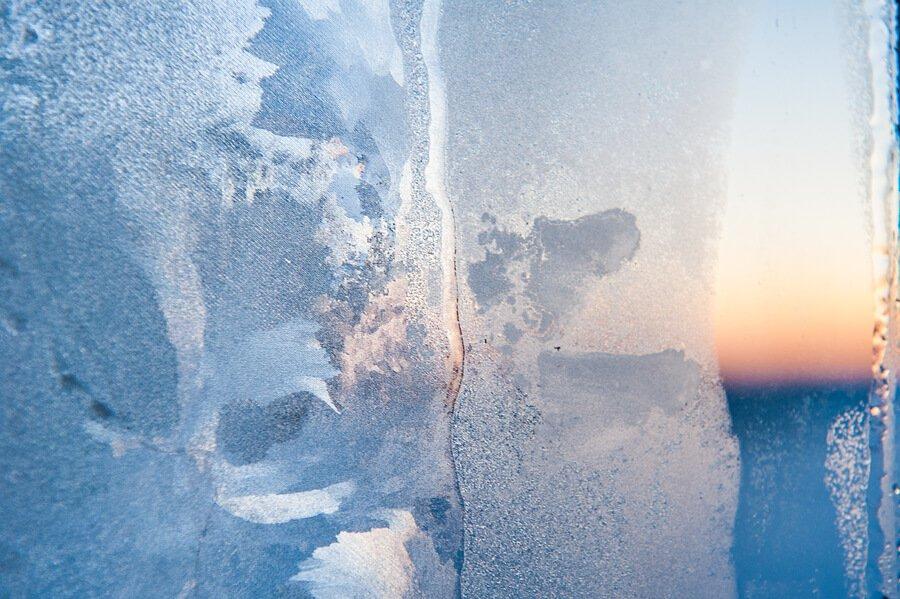
Why the frost pattern matters
A frost complaint becomes manageable once its variables are named. A window is often the first visible surface to report excess winter moisture because it is colder than surrounding finishes. The window may be sound, defective, or simply operating at a difficult temperature-humidity combination. The pattern and comparison with nearby units decide which explanation deserves attention first.
Do not turn 30 to 50 percent relative humidity into a fixed winter rule. It is Health Canada’s broad indoor range, not a promise that every Canadian window will remain dry. As the exterior temperature falls, Natural Resources Canada indicates that the condensation-safe indoor level can fall as well.
Evidence to collect:
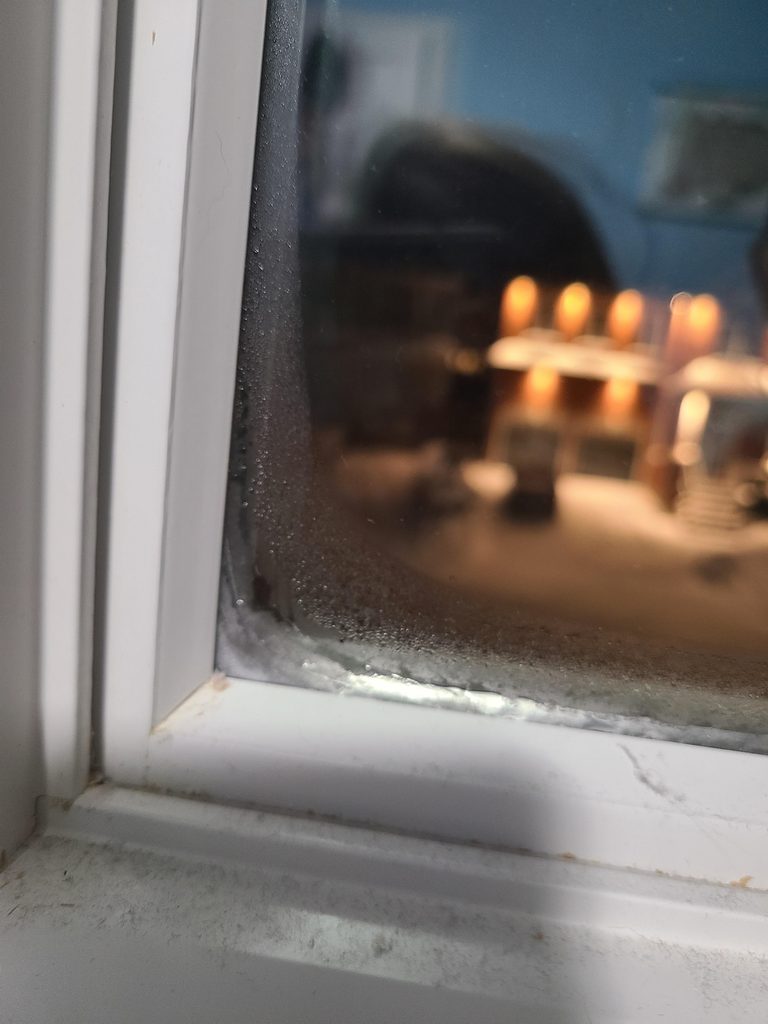
- Surface frost wipes or melts from the room side.
- Moisture remains inaccessible between panes.
- Mineral trails inside the glass cavity.
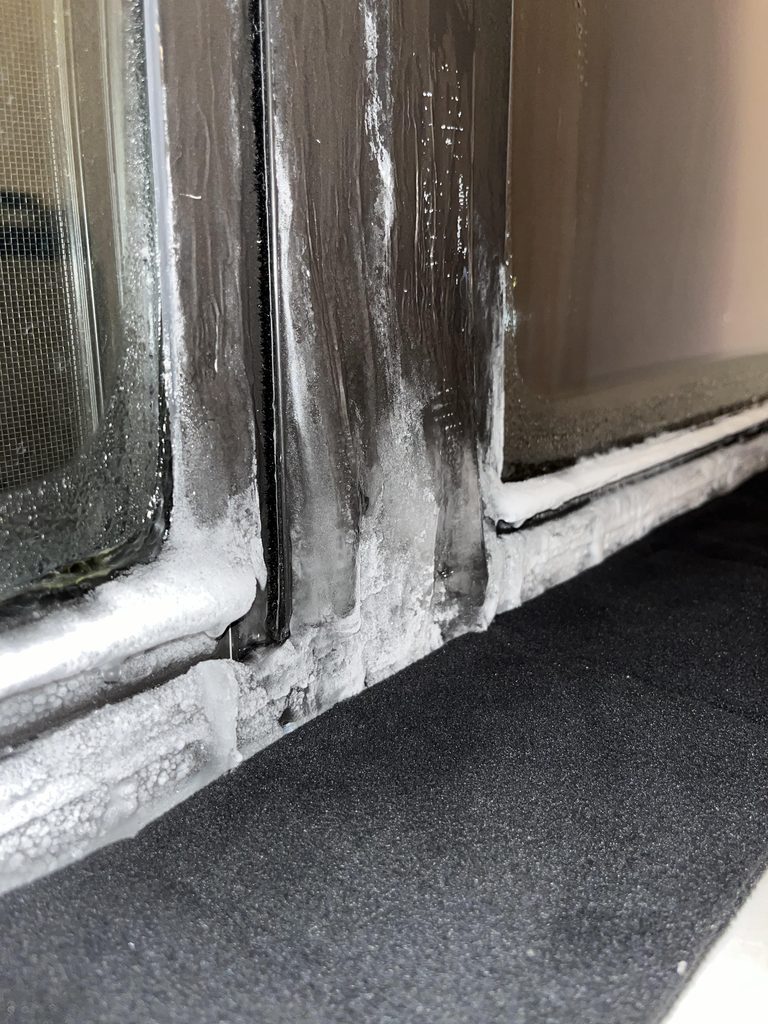
- Several rooms frost only during very cold weather.
Within the diagnostic path for Ice Inside Double-Glazed Windows: Surface Frost or Failed Seal?, use location and timing to distinguish ice on inside of house windows from between-pane moisture, uncontrolled air leakage, or a room-specific airflow problem.
Practical response
- View the unit from several angles and both sides.
- Check whether the symptom changes with indoor humidity.
- Locate the glass date code and warranty.
- Inspect sash, frame, drainage, and operation.
- Request an IGU assessment when moisture is sealed inside.
Illustrative scenario
Illustrative scenario: a patio-door panel shows permanent haze in mild weather, while bedroom windows develop removable frost only below -15 C. The first condition supports a sealed-unit review; the second begins with humidity and surface-temperature evidence.
What not to assume
Do not drill, vent, or ‘defog’ a sealed unit as if appearance alone restored its rated performance. A breached seal may require glass-unit replacement, while room-side frost may resolve through moisture, airflow, or temperature changes.
When professional help makes sense
Use a qualified glazier or window service provider when moisture is between panes, glass is cracked, safety glazing is involved, or the sash cannot safely support glass replacement. Use a building-envelope specialist when perimeter leakage or hidden water damage is suspected. For a review centred on Ice Inside Double-Glazed Windows: Surface Frost or Failed Seal?, bring photos and measurements plus the reference steps for frost forming inside windows; the visit can then begin with evidence rather than a generic replacement assumption.
Frequently asked questions
Can high humidity cause fog between sealed panes?
High humidity causes room-side condensation, but accessible indoor air should not enter a sound sealed cavity. Persistent between-pane moisture supports seal failure.
Can only the glass unit be replaced?
Often yes when the frame and sash are sound and compatible. Warranty, dimensions, glazing method, and overall age should be checked.
Does surface ice prove poor glazing?
No. Extreme cold, high indoor humidity, blocked airflow, and local installation conditions can frost otherwise serviceable glazing.
Suggested internal links
Mold and Moisture: Hidden Dangers
Thermal Imaging in Home Inspections
Authoritative sources
Health Canada – Guide to addressing moisture and mould indoors
Health Canada – Ventilation and the indoor environment
Natural Resources Canada – Condensation